
DTH Borehole Drilling Rigs
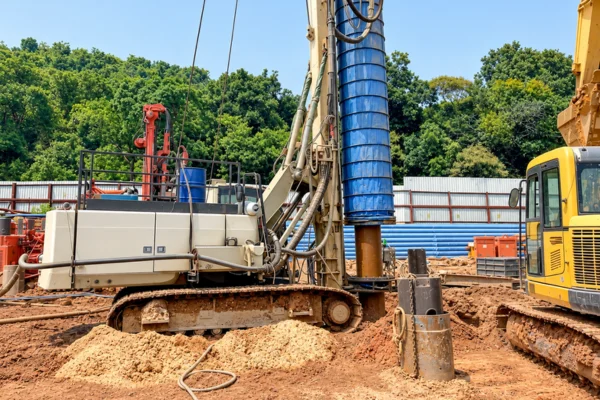
DTH borehole drilling rigs use a down-the-hole hammer to deliver percussion directly behind the drill bit. Powered by compressed air, the hammer repeatedly strikes the bit while the drill string rotates, breaking the rock at the bottom of the hole. This drilling method is widely associated with competent and abrasive rock where effective percussion is required at the bit. Synergy Rigs Nigeria supplies DTH borehole drilling rigs in Nigeria for contractors and projects requiring hard-rock drilling equipment with compatible compressors, hammers, drill rods and bits.
How a DTH Drilling System Works
In a DTH system, compressed air travels through the drill string to the hammer positioned immediately behind the drill bit. The hammer converts the supplied air into repeated impact energy. At the same time, the rig rotates the drill string so the bit works across the complete bottom of the hole. Exhaust air then moves upward through the annular space around the drill string, carrying broken rock and cuttings toward the surface. This combination of percussion, rotation and air flushing is what defines DTH drilling.
DTH Rig Components and Supporting Equipment
A complete DTH drilling system normally combines several components that must work together.
Air Compressor
The compressor supplies the air volume and pressure required to operate the hammer and remove drilling cuttings.
Casing System
Casing may be required where loose overburden or unstable formations need additional borehole support.
DTH Drill Bit
The bit transfers impact energy to the rock and determines the cutting pattern and hole diameter.
Drill Rods
Drill rods transmit rotation and compressed air between the rig and the downhole hammer.
DTH Hammer
The hammer converts compressed air into percussion energy at the bottom of the borehole.
Drilling Rig
The surface rig provides feed force, rotation, mast support and drill-string handling.
DTH Drill Bits and Rock-Breaking Requirements
The drill bit is the component directly contacting the rock, so bit selection affects how the DTH system interacts with the formation. DTH bits are available in different diameters and face designs. Button arrangement and carbide configuration can also vary according to the intended drilling conditions.
Bit selection should consider:
- Required hole diameter
- Hammer model and shank
- Rock hardness
- Rock abrasiveness
- Fracturing and formation characteristics
- Expected wear conditions
The hammer and bit must use compatible shank designs. A bit should not be selected from diameter alone.
Cuttings Removal During DTH Drilling
When evaluating the air system, contractors therefore need to consider both hammer operation and borehole flushing requirements.
Breaking the rock is only part of the drilling process. The fractured material must also be removed effectively from the hole.
Compressed air exhausted from the hammer helps lift cuttings through the annular space between the drill string and bore wall.
Poor cuttings evacuation can interfere with drilling and increase the amount of material remaining around the tooling.
This becomes increasingly important as hole dimensions and drilling depth change.
DTH Rig Specifications to Compare
When comparing DTH borehole drilling rigs, maximum drilling depth should not be the only specification considered. The most useful specification is the one that matches the intended hammer, hole diameter, drill string and rock conditions. Important parameters include:
Compressor pressure requirement
Compressor airflow requirement
Recommended drilling diameter
Drill rod diameter and length
DTH hammer compatibility
Rotation speed range
Mast and feed stroke
Pullback capacity
Rotary torque
Feed force
Why Choose Our DTH Borehole Drilling Rigs?
Suitable for Multiple Industries
DTH solutions can support groundwater, agriculture, industrial water, mining, quarrying, construction and selected exploration applications.
Field-Oriented Equipment Selection
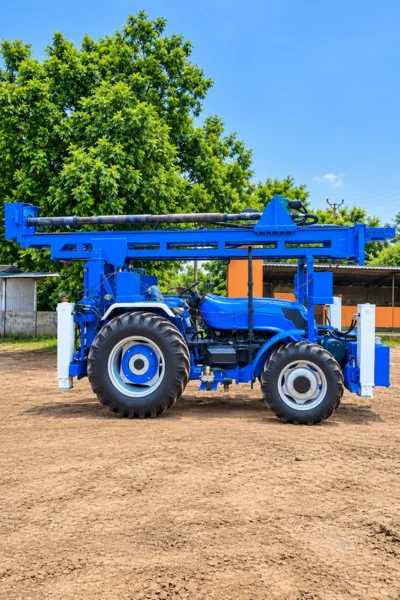
Rig mobility, transportation, maintenance access and supporting equipment can be considered alongside drilling performance.
Matched Hammer and Compressor Selection
Rig performance can be evaluated together with the DTH hammer and compressor instead of treating each component separately.
Purpose-Built for Percussive Rock Drilling
The equipment can be selected around the specific requirements of down-the-hole drilling and hard-rock penetration.
Practical for Challenging Ground
DTH systems are particularly useful where competent or fractured rock creates demanding drilling conditions.
Adaptable to Different Hole Requirements
Equipment can be matched to required hole diameter, drilling depth, formation and project productivity.
Frequently Asked Questions About DTH Borehole Drilling Rigs
1. What does DTH mean in drilling?
DTH means Down-the-Hole. The percussion hammer operates directly behind the drill bit at the bottom of the borehole.
2. Why is DTH drilling effective in hard rock?
The hammer delivers impact energy directly to the rock face, making DTH highly suitable for many hard and competent formations.
3. What compressor is required for DTH drilling?
The compressor must provide sufficient pressure and air volume for the selected hammer, hole diameter, depth and flushing requirements.
4. How deep can a DTH rig drill?
Depth depends on the rig, hammer, drill-string capacity, borehole diameter, formation and compressor performance.
5. Can DTH drilling be used for water wells?
Yes. DTH is widely used for water wells drilled through hard-rock formations.
6. Can DTH rigs drill through soil?
DTH is primarily a rock-drilling method. Loose overburden may require casing, rotary drilling or a combination drilling approach.
7. What affects DTH bit life?
Rock abrasiveness, impact conditions, rotation, feed pressure, flushing performance and operating practices all affect bit wear.
8. Is DTH suitable for mining and quarrying?
Yes. DTH systems are widely used for suitable blast-hole and production drilling applications in rock.
9. What is the difference between DTH and top-hammer drilling?
DTH delivers percussion at the bottom of the borehole, while top-hammer systems generate impact at the surface and transmit it through the drill string.
10. How do I choose a DTH drilling rig?
Consider the rock formation, hole diameter, target depth, hammer size, compressor capacity, mobility and expected drilling productivity.