
Core Drilling Rigs
Core drilling rigs are designed to recover cylindrical samples of subsurface formations for geological examination, mineral exploration, geotechnical investigation, and other projects where the condition and continuity of the recovered material are important. Unlike production drilling, the objective is not simply to create a hole. The drilling system must recover useful core while maintaining the required hole direction and depth. This makes the relationship between the rig, core barrel, drill rods, diamond bit, flushing system, and sample-recovery method particularly important. Synergy Rigs Nigeria Furnishcore drilling rigs in Nigeria for surface exploration and geological drilling programmes requiring controlled drilling and core recovery.
Core Recovery as the Main Drilling Objective
Core drilling removes a cylindrical section of material from the formation instead of breaking the entire bore face into cuttings. As the bit advances, it cuts around the outside of the sample. The central section enters the core barrel and is recovered for examination. Recovered core can provide information about:
Recovered core can provide information about:
- Rock type and lithology
- Geological contacts
- Fractures and structures
- Changes in formation with depth
- Mineralised intervals
- Rock condition
- Core continuity
Because the sample itself is a major output of the drilling process, core condition and recovery requirements influence equipment selection from the beginning of the project.
Diamond Core Drilling System
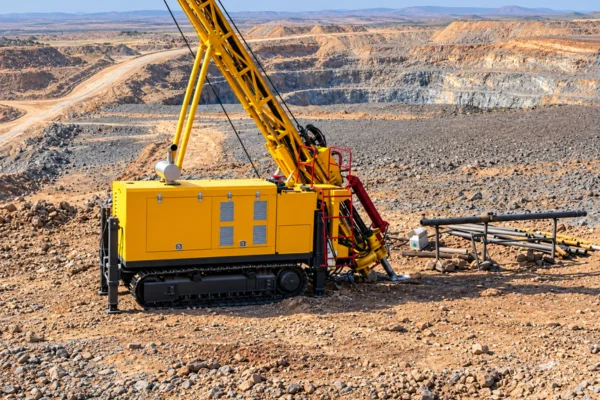
Diamond drilling uses a circular bit containing diamond cutting elements to cut an annular path through the formation. The centre of the formation remains relatively intact and enters the core barrel as drilling progresses. A typical core drilling system includes the drilling rig, drill rods, core barrel, inner tube, diamond bit, reaming shell, water or flushing system, and the components required to recover the sample. These components need to be compatible with the selected core size and drilling programme. The rig must also provide controlled rotation, feed, and pullback for the drill string being used.
Wireline Core Recovery System
Wireline drilling allows the inner tube containing the core sample to be recovered through the drill string without removing the complete rod string after every core run. After the core barrel has been filled, an overshot recovery tool is lowered through the rods to retrieve the inner tube assembly. Once the sample is removed, the inner tube can be returned and drilling can continue. This system is particularly important in deeper exploration drilling because repeatedly withdrawing the entire drill string would add substantial handling between core runs. The rig and tooling should therefore be specified around the intended wireline system from the beginning.
Core Barrel Configuration and Sample Condition
In competent formations, the sample may remain relatively intact during drilling. Broken, fractured, or weak formations can make recovery more difficult because the core may separate or become disturbed before retrieval.
For projects where sample condition is particularly important, the drilling programme may require a core barrel configuration intended to reduce disturbance during recovery.
Tooling selection should therefore consider not only the required diameter but also how the formation is expected to behave during coring.
Different barrel arrangements may be used depending on formation conditions and the required quality of the recovered core.
The core barrel receives and protects the sample as drilling progresses.
Rotation, Feed and Pullback Control
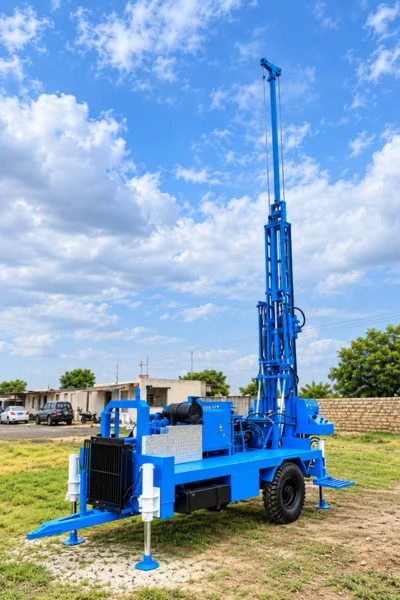
Core drilling requires controlled machine operation rather than simply applying maximum rotary power. The rotary head needs to provide a usable combination of torque and rotation speed for the selected bit, rod system, and geological conditions. Feed control determines how the bit is advanced into the formation. Excessive or poorly controlled feed can affect bit operation and core condition. Pullback capacity becomes increasingly important as drilling depth and drill-string weight increase. These specifications need to be considered together with the intended core system. When comparing core drilling rigs, buyers should therefore review:
Rotation-speed range
Rod compatibility
Pullback capacity
Mast arrangement
Rotary torque
Feed control
Feed stroke
Why Choose Synergy Rigs Nigeria for Core Drilling Rigs?
Core Drilling Tooling
Compatible drill rods, core barrels, diamond bits, reaming shells, and recovery tools can be supplied with the rig.
Project-Based Rig Selection
Core rigs can be selected according to required depth, core size, geology, and drilling angle.
Wireline System Compatibility
Equipment can be matched with BQ, NQ, HQ, or PQ drilling systems according to project requirements.
Complete Core Drilling Setup
Rig and supporting equipment can be configured as a compatible system for exploration drilling.
FAQs for Core Drilling Rig
1. What is a core drilling rig used for?
A core drilling rig recovers cylindrical samples of subsurface formations for mineral exploration, geological investigation, and related sampling work.
2. What is the difference between core drilling and normal drilling?
Core drilling is designed to preserve and recover a cylindrical sample, while many other drilling methods primarily create the hole and return broken cuttings.
3. What is a wireline core drilling rig?
A wireline system allows the inner tube containing the core to be retrieved through the drill rods without pulling the complete rod string after every core run.
4. What do BQ, NQ, HQ and PQ mean in core drilling?
They identify different wireline core-size systems. Each size corresponds to compatible rods, barrels, bits and related tooling, with the series increasing in size from BQ through NQ and HQ to PQ.
5. What is the difference between NQ and HQ core drilling?
HQ produces a larger-diameter core than NQ but also uses larger, heavier drilling components. Selection depends on sample requirements, depth, ground conditions and rig capacity.
6. How deep can a core drilling rig drill?
Depth varies by rig model, core size, rod string, hole angle and geological conditions. Buyers should compare depth capacity for the specific core size they intend to use rather than relying on one general maximum-depth figure.
7. Which core size is best for mineral exploration?
There is no single best size. Selection depends on the required sample diameter, drilling depth, geology and capacity of the drilling rig.
8. What equipment is needed for diamond core drilling?
A setup can include the core rig, wireline drill rods, core barrel, inner tube, diamond bit, reaming shell, recovery tools and flushing equipment.
9. How much does a core drilling rig cost in Nigeria?
The price depends on drilling depth, core-size capability, rig configuration, wireline system, tooling and equipment included in the quotation.