
Borehole Drilling Rigs
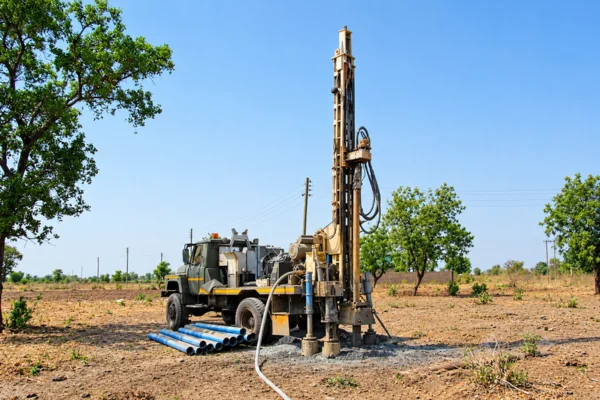
Borehole drilling rigs are specialized machines for creating boreholes through soil, unconsolidated formations, weathered ground and rock. Depending on the rig configuration and drilling method, they can support groundwater development, geotechnical investigation, environmental monitoring, construction, mining, quarrying, geothermal projects and other subsurface drilling requirements.The right borehole drilling rig is determined by the purpose of the borehole, geological formation, required depth, hole diameter, drilling method, access conditions and project productivity requirements. A machine selected for a deep water well may have different capabilities from one intended for investigation, foundation or hard-rock production drilling.
Borehole Drilling Across Different Ground Formations
Borehole drilling conditions can change considerably from one project to another. A drilling system may need to pass through loose overburden before reaching weathered or competent rock, while another project may involve predominantly hard rock from the surface.
Typical formations include:
- Soil and clay
- Sand and gravel
- Alluvial formations
- Weathered rock
- Fractured rock
- Limestone
- Granite
- Basalt
- Sandstone
- Other consolidated formations
Formation characteristics influence the choice of rotary, DTH, rotary-DTH, casing and circulation systems. The drilling method should be selected according to the ground conditions and the required outcome rather than treating every borehole application in the same way.
Drilling Methods for Borehole Projects
The drilling method should match the formation and purpose of the borehole rather than being selected from depth alone.
DTH Drilling
Down-the-hole drilling uses compressed air to operate a hammer positioned behind the drill bit. It is commonly associated with drilling in competent rock formations. A DTH system requires the rig, compressor, hammer, bit and drill string to work together within compatible operating requirements.
Combined Drilling Requirements
Were geology changes significantly with depth, a drilling project may require different tooling or operating methods as the bore progresses. This can be particularly relevant where loose overburden is followed by competent rock.
Rotary Drilling
Rotary drilling advances the hole by rotating a cutting tool while applying controlled feed. Different rotary arrangements and circulation methods can be used according to formation and bore requirements.
Bore Circulation and Formation Control
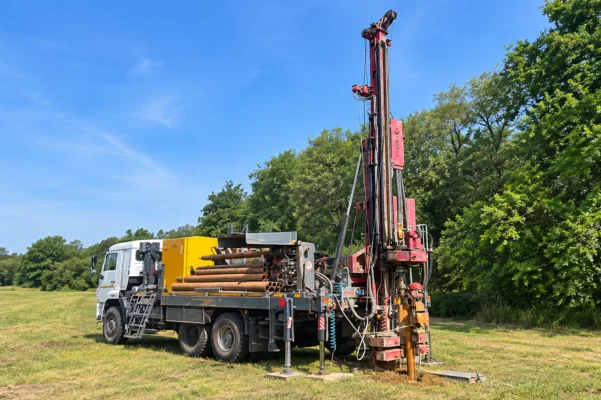
Cuttings must be removed from the bore as drilling progresses. Loose or unstable formations may also require measures to maintain the drilled opening. Depending on the drilling system, this can involve:
01. Casing systems
To support sections of the bore where loose, fractured or unstable material makes the opening difficult to maintain.
02. Air circulation
To transport cuttings from suitable boreholes, including many pneumatic hard-rock drilling operations.
03. Fluid circulation
To carry cuttings and support drilling in formations where a fluid-based system is required.
Applications of Borehole Drilling Rigs
The same rig cannot automatically be considered suitable for every site. Mobility and machine layout become particularly important when drilling locations have restricted or difficult access.
Rural and community water schemes
Emergency or backup water sources
Municipal and institutional projects
Industrial water requirements
Residential water supply
Agricultural irrigation
Livestock water supply
Commercial facilities
Borehole Drilling for Different Project Environments
The same rig cannot automatically be considered suitable for every site. Mobility and machine layout become particularly important when drilling locations have restricted or difficult access.
Remote Locations
Remote drilling projects may prioritize machine mobility, transportability, serviceability and reduced setup requirements.
Open and Accessible Sites
Truck-mounted or larger drilling platforms can be advantageous where transportation and positioning space are readily available.
Restricted Construction Sites
Compact drilling systems may be preferred where access, working height or available space limits the use of larger equipment.
Difficult Terrain
Crawler-mounted equipment can provide useful mobility where the ground conditions and site layout require tracked movement.
Performance Features That Matter in Borehole Drilling
A practical borehole drilling rig should provide a suitable balance between drilling capability, mobility, operating control and serviceability. Important characteristics include:
Tool compatibility
Allows the rig to work with application-specific drilling equipment.
Suitable mast design
Provides the required working stroke and drill-string handling.
Suitable rotary torque
Helps match the machine to the required tooling and formation.
Serviceable components
Helps reduce unnecessary downtime during field operations.
Effective feed force
Supports controlled tool movement through the formation.
Appropriate percussion capability
Important for hard-rock applications using DTH systems.
Efficient cuttings removal
Supports continuous drilling and borehole cleaning.
Practical mobility
Supports movement between drilling locations.
Adequate drilling depth
Supports the planned drilling programmed.
Why Choose Our Borehole Drilling Rigs?
Designed Around the Drilling Objective
Rig selection can be aligned with the actual purpose of the borehole, whether the requirement involves groundwater, investigation, construction, mining or another subsurface application.
Project-Specific Equipment Selection
Rather than selecting equipment based only on a general rig category, specifications can be evaluated against depth, diameter, geology, site conditions and production objectives.
Compatible Drilling Systems
The equipment can be matched with suitable drilling tools, circulation systems, compressors and other supporting equipment required for the selected application.
Suitable for Diverse Ground Conditions
Equipment can be evaluated for soft formations, mixed ground, weathered zones and hard-rock environments based on the appropriate drilling method.
Practical Field Mobility
Rig selection can take account of transportation, access, positioning and movement between drilling locations.
Flexible Application Potential
Borehole drilling solutions can support different industries instead of being limited to a single project type.
Frequently Asked Questions About Borehole Drilling Rigs
1. What should I check before buying a borehole drilling rig?
Check drilling depth, hole diameter, formation type, drilling method, mobility, compressor requirements and expected workload.
2. How is borehole drilling performance measured?
Performance is generally evaluated through penetration rate, drilling depth, hole quality, setup time, fuel or energy use and overall operating productivity.
3. What size borehole can a drilling rig make?
The achievable hole diameter depends on the rig design, drilling method, tooling, casing requirements and ground conditions.
4. Does drilling depth affect rig selection?
Yes. Deeper boreholes require sufficient mast capacity, feed stroke, drill-string handling capability and supporting equipment.
5. What type of compressor is needed for borehole drilling?
Compressor requirements depend mainly on the DTH hammer, hole diameter, drilling depth and required operating pressure and air volume.
6. How important is borehole stability during drilling?
It is critical in loose, fractured or unstable formations. Appropriate casing, drilling fluids or other borehole-control methods may be required.
7. Which rig is suitable for remote drilling locations?
A rig with practical mobility, transportability and field serviceability is generally preferred for remote or difficult-to-access sites.
8. Can drilling rigs operate in different geological formations?
Many rigs can work across multiple formations when the appropriate drilling method, tooling and supporting equipment are selected.
9. What drilling tools are commonly required?
Typical tools include drill rods, DTH hammers, rotary bits, casing equipment and other formation-specific drilling accessories.
10. How long does it take to drill a borehole?
Drilling time varies with depth, formation hardness, hole diameter, drilling method, rig performance and site conditions.
11. What information is needed to select the right rig?
The key information includes project purpose, target depth, borehole diameter, geological conditions, access limitations and expected drilling volume.
12. Is a customized borehole drilling rig necessary?
Not always. Standard equipment may be suitable for many projects, while specialized configurations can be considered for unusual depths, formations, access conditions or drilling objectives.