
Water Well Drilling Rigs
Water well drilling rigs are used to construct boreholes that can be completed as groundwater wells for homes, farms, communities, commercial properties and industrial facilities. Unlike general-purpose borehole drilling, water-well projects must consider not only how the hole is drilled, but also how the well will be constructed and developed for groundwater production. Synergy Rigs Nigeria equip water well drilling rigs in Nigeria for different depths, geological formations and well-construction requirements. Rig selection can be based on the expected aquifer conditions, required well diameter, drilling method, casing design and site access.
Drilling Through Water-Bearing Formations
The geological profile determines how a water well is drilled and constructed. A project may encounter loose surface material, water-bearing sand and gravel, weathered formations or fractured bedrock before reaching the intended aquifer.
Typical conditions include:
- Clay and silt
- Sand and gravel
- Alluvial deposits
- Weathered formations
- Fractured rock
- Limestone
- Sandstone
- Granite and other hard rock
- Mixed overburden and bedrock
Loose formations may require casing or drilling-fluid support to maintain the bore, while competent rock can require a different drilling and circulation system. The objective is not simply to reach a predetermined depth, but to construct a borehole that can be completed appropriately for the groundwater conditions encountered.
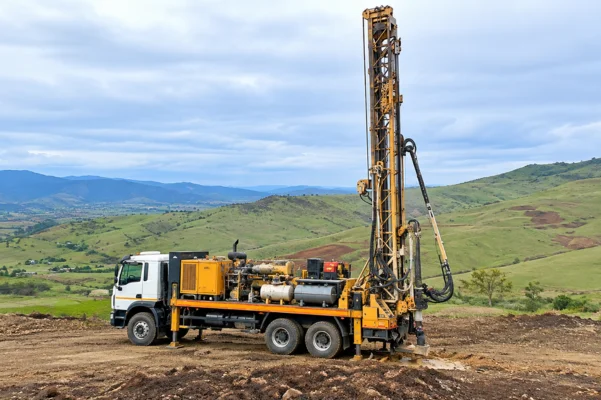
Water Well Drilling Methods and Ground Conditions
The drilling method should be selected around geology, well dimensions and construction requirements.
DTH Water Well Drilling
DTH drilling uses compressed air to operate a hammer behind the bit and is commonly used where water wells need to penetrate competent rock. The setup requires a compatible rig, air compressor, hammer, drill bit and drill string.
Mud Rotary Drilling
Mud rotary drilling uses circulating drilling fluid to transport cuttings and assist with bore stability. It can be used in suitable clay, sand and other unconsolidated formations.
Mixed-Formation Drilling
Some wells pass through unstable overburden before reaching harder bedrock. These projects may require casing support, changes in tooling or more than one drilling approach.
Air Rotary Drilling
Air-based circulation can be used in suitable consolidated formations to remove cuttings from the bore while drilling progresses.
From Drilling to a Completed Water Well
A drilled hole does not automatically become a productive water well. Several stages may follow drilling depending on the well design and formation.
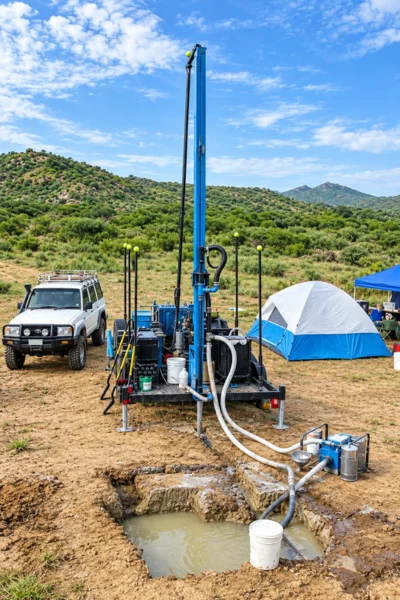
01. Pumping and Performance Testing
Testing can provide information about discharge, drawdown and well response before decisions are made about the final pumping system. These stages make water-well drilling different from projects where the primary objective is simply to create a borehole.
02. Well Development
Development removes drilling residues and fine formation material around the intake area to improve hydraulic connection with the surrounding aquifer.
03. Well Screen Placement
In suitable aquifer conditions, well screens allow groundwater to enter while helping control the movement of formation material into the well.
04. Casing Installation
Casing can support the well structure and isolate sections of the formation where required.
Water Well Rigs for Different Supply Requirements
The intended use of the groundwater influences the scale of the project and the required well output.
Commercial and Industrial Supply
Facilities with higher water requirements may require wells designed around production rate, operating schedule and water-quality requirements. The required water supply should be established before finalizing the well and pumping system. A deeper borehole does not necessarily produce a higher groundwater yield.
Community Water Projects
Community and institutional wells may need to serve larger groups of users and should be planned around expected demand and aquifer capability.
Agricultural Water Supply
Irrigation and livestock operations can require greater or more sustained groundwater production depending on the farm and seasonal demand.
Domestic Water Supply
Private properties and residential developments may require wells designed around household or shared water demand.
Equipment Used for Water Well Drilling
The supporting equipment changes according to the selected drilling method and well design.The main rig and supporting equipment should be considered as one system to avoid capacity or connection mismatches. A water-well drilling setup may include:
Mud pump and mixing equipment
Borehole cleaning equipment
Well-development equipment
Casing installation tools
Rod adapters and subs
DTH hammers and bits
Air or fluid hoses
Rotary drill bits
Air compressor
Drill rods
Why Choose Synergy Rigs Nigeria for Water Well Drilling Equipment?
Water-Demand Focused Selection
Equipment decisions can account for the type and scale of groundwater project rather than treating every water well as the same drilling job.
Complete Drilling System Planning
Compressors, rods, hammers, bits, mud equipment and casing tools can be considered alongside the drilling rig.
Options for Different Geological Conditions
Equipment can be configured for unconsolidated formations, mixed geology and hard-rock water-well projects.
Equipment Matched to the Well Design
Rig requirements can be evaluated against the planned depth, diameter, casing and drilling method.
FAQs for Water Well Drilling Rig
1. How deep should a water well be in Nigeria?
There is no standard depth for every location. Required depth depends on local geology, aquifer conditions and the intended well design.
2. Which drilling rig is best for water wells?
The required rig depends on depth, bore diameter, geology, drilling method, casing requirements and site access.
3. Can a water well be drilled through hard rock?
Yes. DTH drilling is commonly used where water-well construction involves competent rock formations.
4. Does a deeper water well produce more water?
Not necessarily. Well yield depends mainly on the aquifer, fractures, permeability and groundwater conditions encountered.
5. When does a water well need casing?
Casing may be required to support unstable formations, protect the well structure or isolate particular sections of the bore.
6. What size air compressor is needed for a water well rig?
For DTH drilling, compressor requirements depend on the hammer, hole diameter, depth and required pressure and airflow.
7. What equipment is needed to drill a water well?
A setup may require drill rods, bits, compressors or mud pumps, casing equipment and other tools according to the drilling method.
8. How long does it take to drill a water well?
Drilling time varies with depth, diameter, geology, drilling method, site conditions and well-construction requirements.
9. How much does a water well drilling rig cost in Nigeria?
Price depends on drilling capacity, machine configuration and included equipment. A quotation based on the intended well specifications provides a more useful cost.