
Underground Mining Drilling Rigs
Underground mining drilling rigs are designed for drilling within tunnels, declines, drifts, stopes, and other restricted mine workings. Equipment selection must consider not only drilling capacity but also machine dimensions, mine access, manoeuvrability, drilling coverage, power requirements, and underground operating conditions. Synergy Rigs Nigeria provides underground mining drilling rigs in Nigeria for mine development, production drilling, and other underground drilling requirements.
Underground Drilling Operations
Underground mines require different drilling operations as development progresses. The rig configuration should match the drilling purpose, hole arrangement, and available working space.
Mine Development Drilling
Development drilling supports the advancement of underground mine openings. The rig must position the drilling system across the required face while operating within the available tunnel dimensions. Hole length, drilling coverage, rock conditions, and excavation profile should be considered when selecting equipment for development work.
Underground Production Drilling
Production drilling generally involves planned groups of holes positioned according to the mining method and orebody geometry. These operations may require longer holes and different drilling orientations than development work, making feed configuration, positioning range, and drilling capacity important equipment considerations.
Ground Support and Auxiliary Drilling
Underground operations may also require drilling for ground-support installation and other mine-development activities. Where one machine is expected to perform several duties, its drilling range and tooling compatibility should be reviewed for each intended operation.
Rig Dimensions, Access and Drilling Coverage
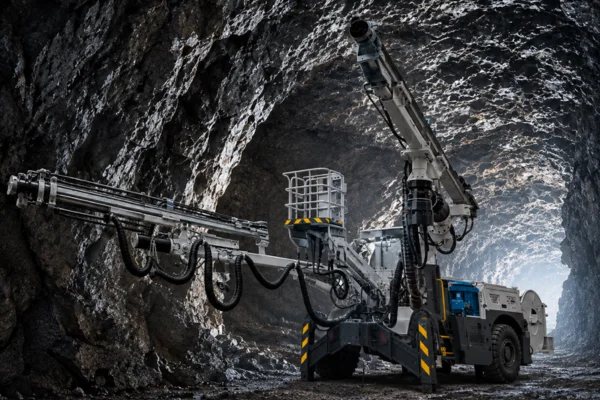
Physical machine dimensions are particularly important underground. A rig may have sufficient drilling capacity but still be unsuitable if it cannot travel through the mine or operate within the available working area. Important measurements include machine width, overall height, length, ground clearance, turning space, and working clearance.
01. Boom and Feed Positioning
The boom and feed system determine where the drilling unit can be positioned without repeatedly relocating the complete machine. Required coverage may include horizontal, upward, downward, or angled holes depending on the underground drilling operation.
02. Underground Manoeuvrability
Mine access routes can include narrow passages, gradients, intersections, and restricted turning areas. Machine dimensions and mobility should therefore be compared with the complete travel route to the drilling location.
Underground Power and Operating Requirements
Depending on machine configuration, drilling systems may incorporate hydraulic, electric, diesel, or combined power arrangements. The selected system should correspond with available mine infrastructure and operating requirements.
For projects located far from surface workshops, planning commonly required consumables and replacement components can help support continued drilling operations.
Ventilation, dust management, water supply, maintenance access, and availability of service components should also be considered before deployment.
The underground environment affects how drilling equipment is powered, operated, and maintained.
Selecting an Underground Mining Drilling Rig
Rig selection should begin with the physical mine environment and the intended drilling operation.
Key information includes:
- Mine opening and access dimensions
- Development or production drilling requirement
- Required hole diameter and length
- Drilling direction and angle
- Rock conditions
- Required drilling coverage
- Available power infrastructure
- Underground mobility requirements
Matching these factors helps prevent selecting a machine that provides the required drilling capacity but cannot operate effectively within the mine layout.
Why Choose Synergy Rigs Nigeria for Underground Mining Rigs?
Supporting Equipment Requirements
Associated drilling equipment and project requirements can be considered when preparing the required machine configuration.
Drilling Configuration Support
Rig specifications can be compared with required hole dimensions, drilling orientation, and working coverage before procurement.
Mine-Specific Equipment Selection
Equipment requirements can be reviewed according to underground access dimensions, drilling duties, and operating conditions.
FAQs for Underground Mining Drilling Rig
1. What is an underground mining drilling rig?
It is a drilling machine configured to operate within underground mine workings for development, production, and related drilling operations.
2. What is a jumbo drill used for?
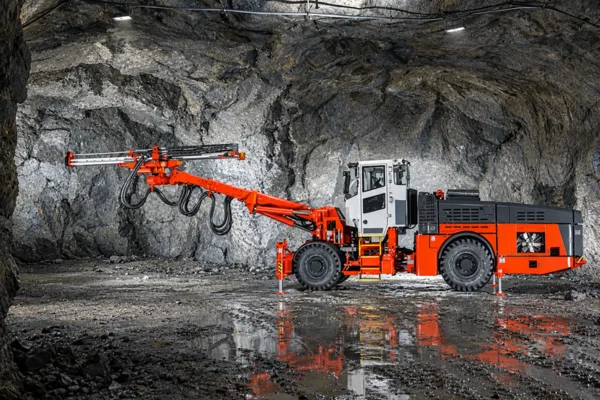
A jumbo drill positions drilling feeds across a working face and is commonly used for mine development and tunnelling.
3. What is underground production drilling?
It involves drilling planned holes within underground production areas according to the mine's extraction method and hole design.
4. Can underground drilling rigs drill angled holes?
Yes. Available drilling angles depend on the rig's boom, feed, and positioning configuration.
5. How do I choose the correct size of underground drilling rig?
Compare the machine dimensions and turning requirements with mine access routes, working areas, and required drilling coverage.
6. Can underground mining rigs operate on electric power?
Some underground rigs use electric-hydraulic systems, while configurations vary according to machine design and mine infrastructure.
7. Are underground mining drilling rigs available in Nigeria?
Yes. Synergy Rigs Nigeria supplies underground drilling equipment according to project and mine requirements.
8. What details are needed for a quotation?
Provide mine dimensions, drilling application, hole requirements, rock conditions, power requirements, and equipment quantity.
9. How much does an underground mining drilling rig cost in Nigeria?
Cost depends on rig type, drilling capacity, machine configuration, power system, and included equipment.